
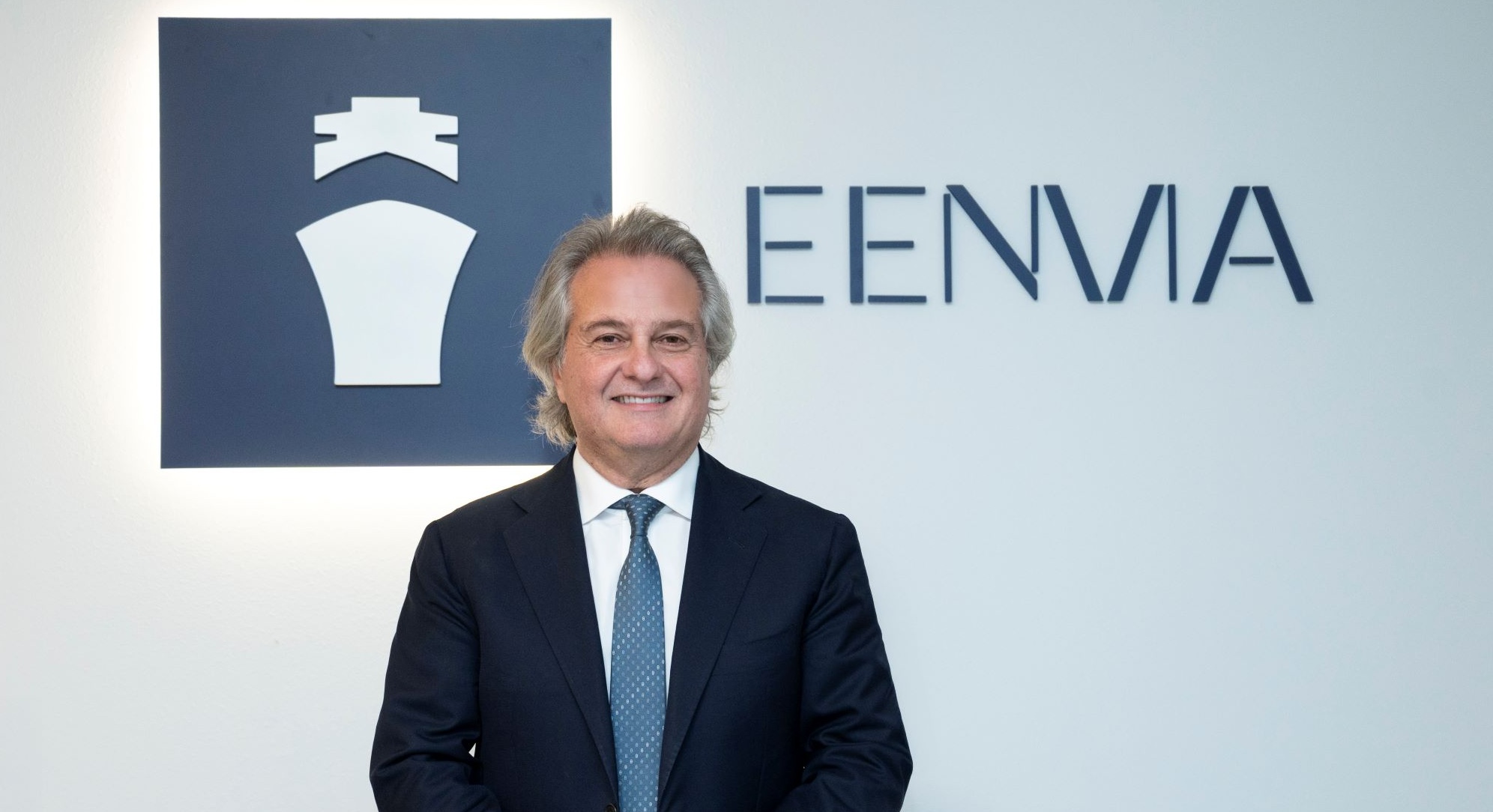
Article by Charalambos Simantonis
President of the European Shortsea Network and the Hellenic Shortsea Shipowners Association
Many describe Europe as a “blue continent” due to the fact that it possesses the world’s largest maritime area, with more than 90,000 kilometres of coastline, extensive island and archipelagic regions, and interconnected maritime zones that form natural trade corridors. Those of us in shipping often say that maritime transport represents the “heartbeat” of Europe, as it quite literally sustains everyday life by transporting goods and people. In simple terms, Europe’s economic geography is inherently maritime.
In recent years, shipowners have increasingly assumed a leading role in shaping the future of European transport. From the Draghi Report to the latest European strategies, shortsea shipping is now recognised as a critical pillar in Europe’s efforts to shift cargo from road to sea transport, reduce carbon emissions and strengthen competitiveness.
Last March, the European Commission adopted targeted new strategies for shipping and ports, acknowledging key objectives such as strengthening competitiveness, promoting sustainability, supporting decarbonisation, and enhancing the safety and resilience of the wider maritime transport sector. These developments place shipping, ports and the broader maritime industry at the centre of Europe’s future planning.
The Hellenic Shortsea Shipowners Association (EENMA), together with the European Shortsea Network (ESN) – the organisation representing shortsea shipping across Europe and currently chaired by Greece – fully supports this European vision. However, we believe that two major challenges will determine the future course of shortsea shipping.
The first challenge concerns the Fit for 55 package, the EU Emissions Trading System (ETS) and the FuelEU Maritime Regulation. These measures are creating significant pressures on the shortsea shipping sector, particularly at a time when sufficient and readily available alternative fuels are still lacking.
Furthermore, there are growing concerns regarding the ability of many vessels to adapt to the new environmental regulatory framework. The implementation of these measures is already generating operational and economic pressures throughout the European maritime sector.
The Fit for 55 package, ETS and FuelEU Maritime requirements place considerable burdens on shortsea shipping, especially when alternative fuels remain neither adequately available nor sufficiently developed. At the same time, the green transition cannot rely solely on regulatory measures.
Recognising both the scale of the challenge and its implications for the sector, EENMA commissioned a study by the Foundation for Economic and Industrial Research (IOBE) last year to assess the trends and economic impacts of shortsea shipping in Greece.
According to the findings of the study, the total cost of compliance with the new measures is expected to reach €225 million by 2030, with the largest share resulting from the extension of the ETS. Revenue losses for shortsea shipping companies, due to reduced traffic after accounting for the additional costs imposed by the new framework, are estimated at approximately €140 million by 2030.
The study further suggests that these developments could lead to a reduction in traffic volumes of up to 17% by 2030. Moreover, there is a risk of trade diversion away from the Aegean region, with potential consequences for employment and regional economic activity.
At this point, I would like to stress that shortsea shipping is not opposed to environmental progress, fleet modernisation or sustainability initiatives. On the contrary, we strongly support these objectives. However, the transition is complex and requires continuous vigilance. Its success depends on close cooperation among Member States, meaningful support for small and medium-sized shipping companies, and substantial investment in ports and energy infrastructure.
This brings us to the second major challenge: access to and effective utilisation of financing instruments.
The European Union has placed considerable emphasis on financial mechanisms intended to support the green transition. Yet for many small and medium-sized shipping companies, access to these programmes remains difficult. In many cases, funding schemes are designed primarily with large organisations in mind, creating a gap that risks excluding a significant part of the shortsea shipping sector from the transition process in practice.
Read the whole article here.